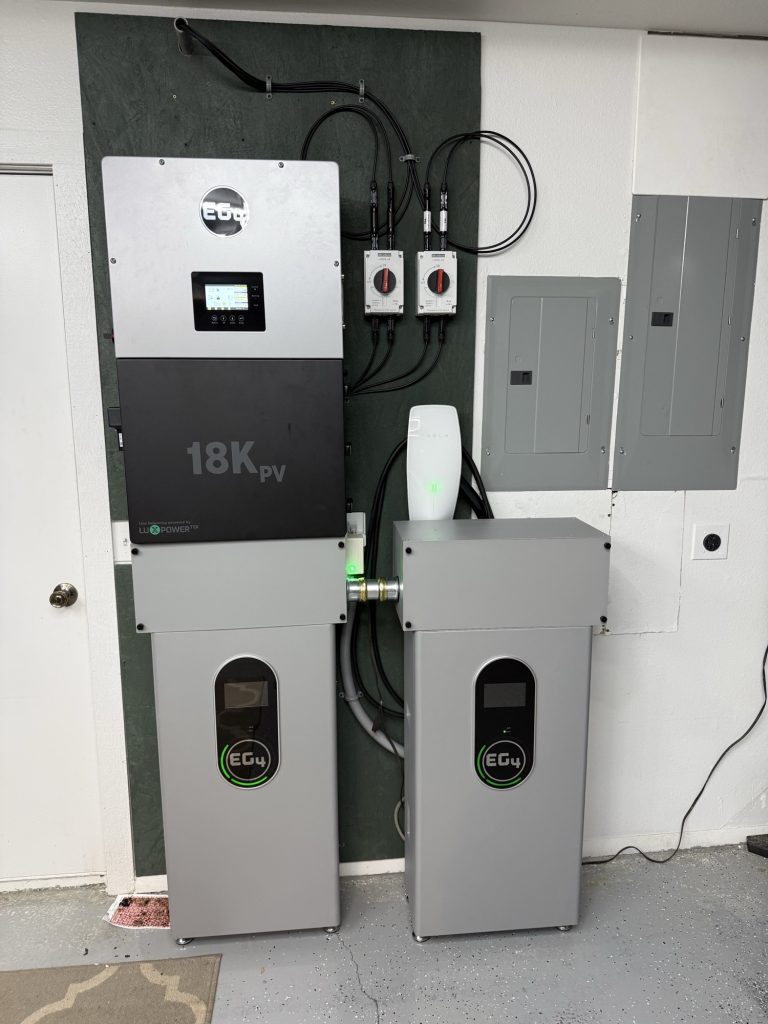
This is my actual system. After months of research and hands-on installation, here’s everything I learned about building a whole-home battery backup system that actually works in a rural setting.
How to Build a Whole-Home Battery Backup System with EG4: Complete Step-by-Step Guide
Living off-grid or in rural areas where power outages are common? You’re not alone. Millions of rural homeowners are discovering that whole-home battery backup systems aren’t just luxury items—they’re necessities. Today, we’ll walk through building a comprehensive EG4 battery backup system that can keep your entire home powered during outages, reduce your electricity bills, and give you true energy independence.
EG4 Electronics has revolutionized the solar and battery backup industry with their reliable, American-designed systems. Whether you’re completely off-grid or want backup power for grid-tie applications, this guide will show you exactly how to build a whole home battery backup system that actually works.
Why Choose EG4 for Your Battery Backup System?
Before we dive into the build process, let’s talk about why EG4 has become the go-to choice for rural homeowners and off-grid enthusiasts:
- UL 9540 Certified: EG4 is the only off-grid energy storage system with this certification
- True whole-home backup: Power everything from lights to well pumps to air conditioning
- Scalable systems: Start small and expand as your needs grow
- Outstanding warranty: Industry-leading coverage on batteries and inverters
- American support: Real people you can talk to when you need help
The Heart of Your System: EG4 18K-PV Hybrid Inverter
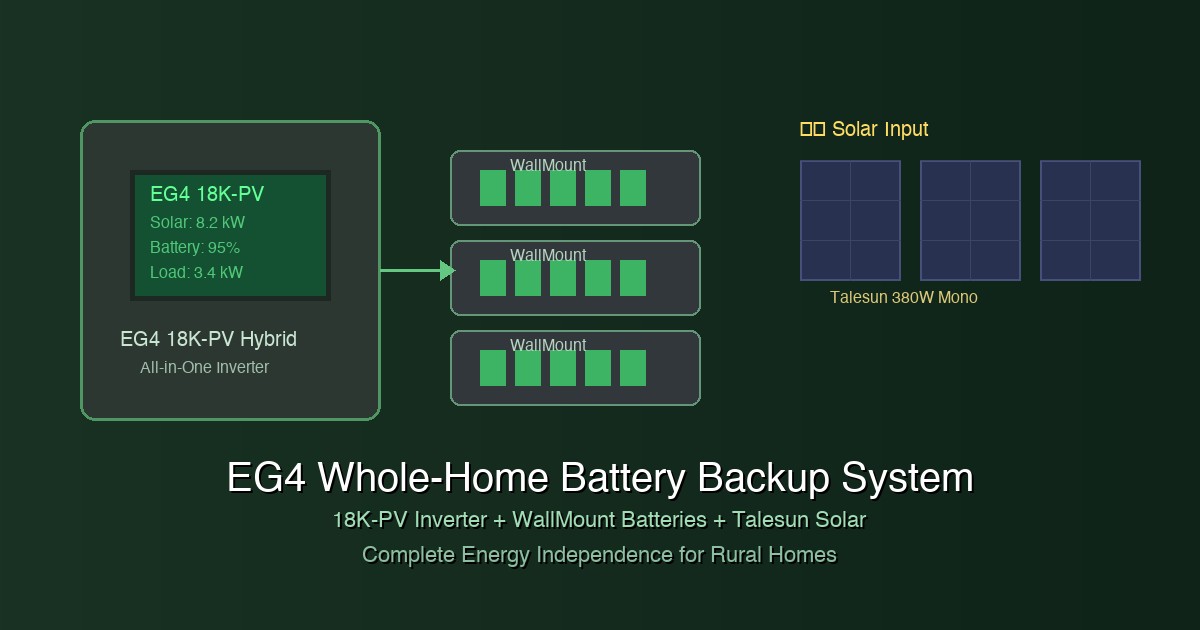
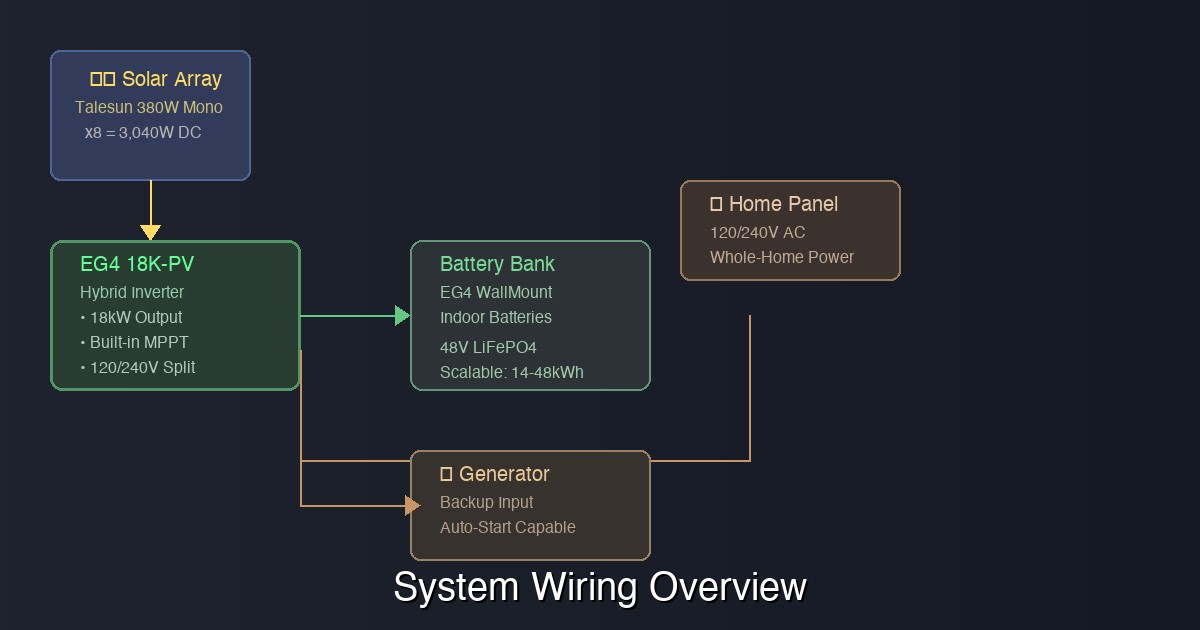
The EG4 18K-PV is the flagship all-in-one hybrid inverter that forms the backbone of a serious whole-home battery backup system. This isn’t a starter unit — it’s what you go with when you want to power your entire home without compromise.
EG4 18K-PV Key Specifications
- 18,000W continuous power: Run your entire home — HVAC, well pump, kitchen appliances, everything
- 27,000W surge capacity: Start the heaviest motors and compressors without breaking a sweat
- Split-phase 120/240V output: True whole-home compatibility, just like utility power
- Built-in dual MPPT solar charge controllers: Up to 12,000W of direct solar input — no external charge controller needed
- 48V battery system: Works with EG4’s full range of LiFePO4 batteries
- Generator input with auto-start: Seamless backup when solar and batteries aren’t enough
- EG4 Connect monitoring: Real-time system monitoring from your phone
The 18K-PV is available through authorized EG4 distributors like SanTan Solar. It’s the inverter we run in our own setup and it’s been rock solid.
EG4 Indoor WallMount Batteries: Clean, Efficient Storage
For battery storage, EG4’s indoor WallMount batteries are the way to go if you want a clean, space-efficient installation. These wall-mounted LiFePO4 battery units are designed specifically for indoor residential installations and pair perfectly with the 18K-PV.
EG4 WallMount Battery Options
- EG4 WallMount Indoor Battery (280Ah / 14.34 kWh): The standard indoor unit — enough capacity to back up most homes for a full night. Wall-mounted design keeps your floor space clear and installation clean.
- EG4 WallMount 314Ah All Weather (16.07 kWh): The beefier option with outdoor capability if you need it, though it works great indoors too. More capacity per unit means fewer batteries needed.
Both WallMount options feature built-in BMS (Battery Management System), CAN bus communication with the 18K-PV for seamless integration, and are UL 9540 certified. Stack multiple units in parallel to build the capacity you need — most whole-home setups run 2-4 WallMount batteries for 28-64 kWh of total storage.
These are available through SanTan Solar and other authorized EG4 dealers.
Solar Panels: Talesun 380W Mono
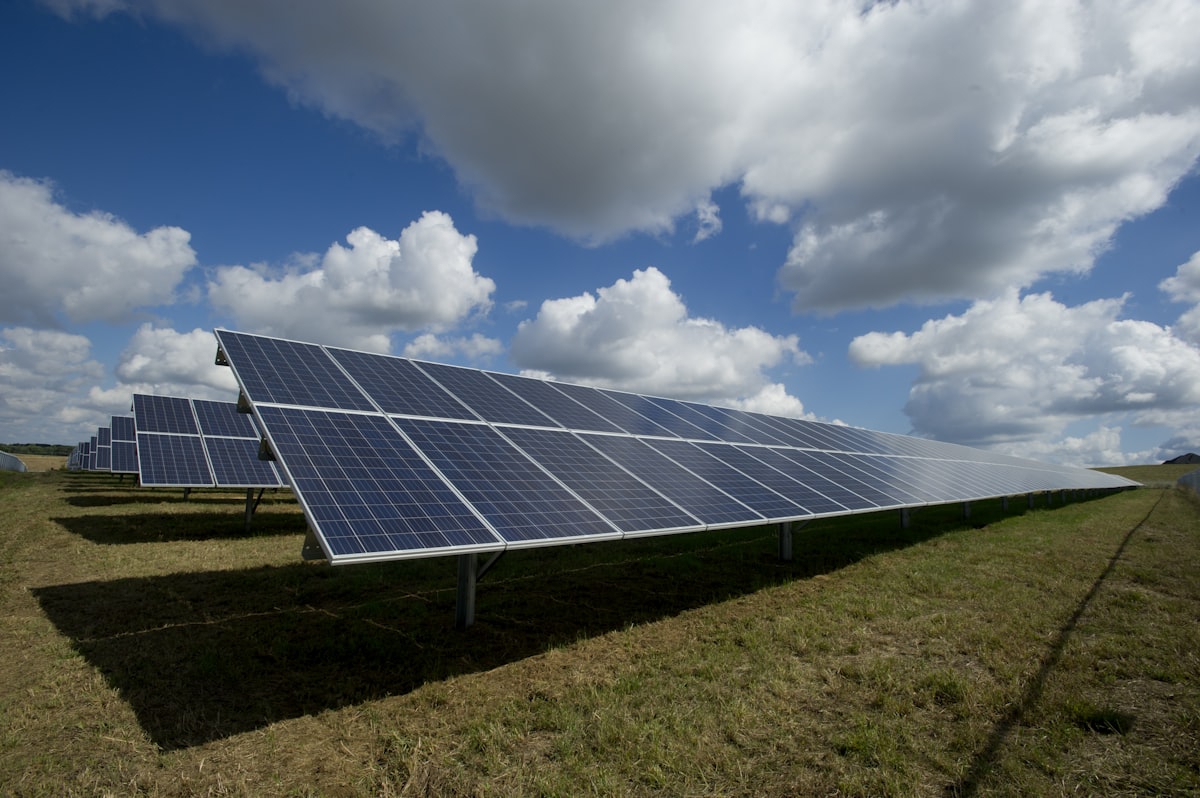
To feed the 18K-PV’s dual MPPT inputs, we’re running Talesun 380W Mono solar panels. These are solid, reliable monocrystalline panels that deliver excellent performance for the price. At 380W per panel, an array of 8-12 panels gives you 3,040W to 4,560W of solar input — plenty to charge your battery bank and power daytime loads simultaneously.
Talesun is a Tier 1 solar manufacturer with a strong track record, and the 380W Mono panels offer a great balance of efficiency, durability, and value. They pair perfectly with the 18K-PV’s MPPT voltage and current ranges.
Budget-Friendly Alternative Components
Not everyone can go all-in on a full EG4 system right away, and that’s okay. Here are some budget-friendly alternatives available on Amazon that can get you started with battery backup or serve as compatible additions to an EG4 system:
Alternative Inverters
- EG4 6000XP: A smaller, more affordable EG4 option with 6,000W continuous / 9,000W surge. Great for essential loads backup or as a starting point you can expand later.
- EG4 12000XP: Mid-range option with 12,000W continuous / 18,000W surge and parallel capability for scaling up.
Alternative 48V Battery Options (Amazon)
If you’re on a tighter budget or want to start small before committing to EG4’s WallMount system, these third-party 48V LiFePO4 batteries are compatible alternatives:
ECO-WORTHY 48V 100Ah LiFePO4 Lithium Battery — UL1973 & UL9540A certified, 5.12 kWh per unit. A solid budget option for getting started with battery backup ($849.99).
VATRER 48V 100AH Lithium LiFePO4 Battery — Built-in smart display and mobile app monitoring. Good for those who want per-battery monitoring ($1,169.99).
Note: While these Amazon batteries work, the EG4 WallMount batteries offer better integration with EG4 inverters (CAN bus communication, matched BMS), higher capacity per unit, and the UL 9540 certification that third-party options typically lack. If budget allows, the EG4 ecosystem is the way to go.
Essential Materials and Tools
⚠️ SAFETY WARNING: Working with electrical systems can be dangerous. Always consult with a licensed electrician for final connections to your home’s electrical panel. Turn off main breakers before working on any electrical connections. Wear appropriate safety equipment and never work alone on electrical projects.
Installation Tools
- Digital multimeter
- Wire strippers and crimpers
- Torque wrench set
- Safety equipment (gloves, safety glasses)
- Battery terminal cleaning tools
- Cable management supplies
Electrical Components
- Manual transfer switch or automatic transfer switch
- AC and DC disconnect switches
- Grounding equipment
- Electrical conduit and fittings
- Battery cables (4/0 AWG recommended for high-current applications)
- Surge protection devices
Step 1: Planning Your System
The first step in building any successful battery backup system is proper planning. You need to understand your power requirements, determine the right size system, and plan your installation layout.
Calculate Your Power Needs
Start by identifying your essential loads during a power outage:
- Critical loads: Refrigerator, freezer, well pump, security system
- Comfort loads: Lights, fans, TV, internet router
- Heating/cooling: Heat pump, wood stove blower, mini-split systems
For a typical rural home, plan for 10-20 kWh of daily energy consumption during outages. With EG4 WallMount batteries at 14.34 kWh each, you’d need 2-3 batteries for basic backup, or 3-4 for comprehensive whole-home coverage. If using the server-rack LifePower4 batteries (5.12 kWh each), plan for 4-8 units.
Battery Sizing Formula
Battery Capacity (kWh) = Daily Energy Use (kWh) × Days of Backup × 1.2 (safety factor)
For example:
- Daily energy use: 15 kWh
- Days of backup wanted: 2 days
- Calculation: 15 × 2 × 1.2 = 36 kWh needed
- EG4 WallMount batteries: 36 ÷ 14.34 = 3 batteries (rounded up)
- Or LifePower4: 36 ÷ 5.12 = 7 batteries (rounded up)
Step 2: Installation
Important: This section is for educational purposes. Always have a licensed electrician perform electrical connections to your home’s main panel and any connections involving high voltage.
Phase 1: Prepare Your Installation Area
- Choose your location: Select a well-ventilated area. Basements, garages, or dedicated equipment rooms work well. The WallMount batteries are designed for clean indoor installation on any sturdy wall.
- Plan your layout: The 18K-PV and WallMount batteries should be mounted close together to minimize cable runs. Ensure adequate clearance for cooling and maintenance access.
- Plan cable runs: Keep DC cables as short as possible to minimize voltage drop. Plan routes for AC output to your electrical panel.
- Install grounding system: Proper grounding is essential for safety and code compliance.
Phase 2: Battery Installation
- Mount batteries on wall: Follow EG4’s mounting specifications. The WallMount units include all necessary hardware.
- Connect batteries in parallel: Use high-quality 4/0 AWG cables with proper torque specifications.
- Connect CAN bus communication: The WallMount batteries communicate with the 18K-PV via CAN bus for integrated BMS management.
- Test individual battery voltages: Verify all batteries are at similar voltage levels before connecting to the inverter.
Phase 3: Inverter and Solar Connection
- Mount the 18K-PV: Install on a sturdy wall, allowing for adequate cooling clearance.
- Connect DC battery input: Install DC disconnect switches and connect battery bank to inverter.
- Wire solar input: Connect your Talesun 380W panels to the dual MPPT inputs. Configure string sizing according to the 18K-PV’s voltage and current specifications.
- Wire AC output: Connect inverter AC output to your transfer switch or main panel.
- Set up monitoring: Connect Ethernet or Wi-Fi for EG4 Connect remote monitoring.
Step 3: Wiring Guidelines
Proper wiring is critical for both safety and performance in your EG4 battery backup system.
DC Wiring
- Use proper gauge wire: 4/0 AWG for main battery connections, 2/0 AWG for shorter runs
- Install fuses or breakers: Protect each battery string with appropriate overcurrent protection
- Minimize cable length: Every foot of cable adds resistance and voltage drop
- Use marine-grade terminals: Ensure long-term reliability with quality connections
AC Wiring
- Split-phase wiring: The 18K-PV provides 120/240V split-phase power identical to utility power
- Neutral and ground: Follow NEC codes for proper neutral and grounding connections
- Transfer switch wiring: Ensure proper interlock to prevent backfeeding the utility
Step 4: Generator Integration
One of the major advantages of the 18K-PV is its ability to work seamlessly with backup generators for extended outages.
- AC Generator Input: Connect your generator to the 18K-PV’s AC input for automatic battery charging
- Automatic Start/Stop: The 18K-PV’s contact closure output can trigger automatic generator start when batteries reach a preset level (check out our generator automation guide for a DIY approach using Home Assistant)
- Load Sharing: The inverter simultaneously powers loads and charges batteries from generator power
- Fuel Management: Set charge limits to conserve generator fuel while ensuring adequate backup power
Recommended Generator Sizing
- 10-15 kW: Adequate for battery charging plus essential loads
- 20-25 kW: Handle full home loads while charging batteries
- Dual-fuel capability: Propane and natural gas options provide fuel flexibility
Step 5: Monitoring with EG4 Connect
- Real-time monitoring: Track power generation, consumption, and battery status
- Historical data: Analyze system performance over time
- Alert notifications: Receive alerts for system issues or maintenance needs
- Remote troubleshooting: Allow EG4 support to assist with system optimization
Maintenance and Long-term Care
Monthly Tasks
- Check EG4 Connect for any alerts or abnormal readings
- Visually inspect battery terminals and WallMount mounting hardware
- Test transfer switch operation
- Clean dust from inverter cooling vents
Annual Tasks
- Professional system inspection by qualified technician
- Battery capacity testing and documentation
- Torque check on all electrical connections
- Generator testing and maintenance
- Update system firmware as recommended by EG4
- Inspect solar panel connections and clean panels
Cost Considerations and ROI
System Cost Breakdown
- EG4 18K-PV Inverter: ~$4,000-$4,500
- EG4 WallMount Batteries (x3): ~$4,500-$6,000
- Talesun 380W Solar Panels (x8-12): ~$1,500-$2,500
- Balance of system: $1,000-$2,000 (wiring, switches, installation materials)
- Professional installation: $2,000-$5,000
- Total system cost: $13,000-$20,000 for a complete installation
Financial Benefits
- Avoided outage costs: Prevent food spoilage, lost productivity, and emergency hotel stays
- Peak shaving: Reduce utility demand charges in applicable areas
- Solar integration: Maximize solar investment with battery storage
- Property value: Increase home value with permanent backup power system
- Federal tax credit: Solar + battery systems qualify for the 30% federal ITC
Conclusion: Your Path to Energy Independence
Building a whole-home battery backup system with EG4 components — specifically the 18K-PV inverter and WallMount indoor batteries, paired with reliable Talesun 380W Mono solar panels — provides the ultimate in energy security for rural homeowners. While the initial investment is significant, the peace of mind and long-term benefits make it worthwhile.
Key takeaways:
- Start with the right inverter: The EG4 18K-PV gives you room to grow without replacing your core equipment
- EG4 WallMount batteries offer the cleanest, most integrated indoor installation
- Talesun 380W Mono panels deliver reliable solar input at a great price point
- Budget alternatives exist if you need to start smaller and scale up over time
- Professional installation matters: Work with qualified electricians for safety and code compliance
- Monitor your investment: Use EG4 Connect to optimize performance
Whether you’re dealing with frequent outages, want to reduce dependence on the grid, or simply want the security of backup power, an EG4 battery backup system can provide the reliable, whole-home power solution you need. Start planning your system today, and take the first step toward true energy independence.
For more rural living and energy independence tips, explore our other guides on automating your generator with the EG4 18K-PV, solar power, and home automation solutions designed specifically for rural homeowners.
???? Related Articles
???? Free Tool: Solar System Calculator
Planning your own solar setup? Use our free Solar System Calculator to size your panels, batteries, and inverter based on your location and actual appliance usage.