Power outages are a fact of life in rural America. Whether it’s an ice storm knocking out lines, a transformer blowing during summer heat, or just living at the end of a long distribution line, rural homeowners deal with more frequent and longer outages than their suburban neighbors. A portable power station can be the difference between riding out an outage comfortably and scrambling in the dark.
Unlike traditional gas generators, portable power stations are silent, produce zero emissions, work safely indoors, and can be recharged from solar panels — making them ideal for the rural lifestyle. In this guide, we’ll break down the best options for 2026, what to look for, and how to size one for your specific needs.
Why Rural Homeowners Need a Portable Power Station
Rural areas face unique power challenges that make portable power stations especially valuable:
- Longer outage recovery times: Utility crews prioritize densely populated areas first. Rural lines can take days to restore after major storms.
- Well pump dependency: No power means no water if you’re on a well system. A power station can keep a small pump running.
- Medical equipment: CPAP machines, refrigerated medications, and oxygen concentrators need reliable power.
- Livestock and farm operations: Heated waterers, incubators, and monitoring systems can’t afford downtime.
- Remote work: More rural residents work from home — losing internet and laptop power means losing income.
How to Size a Portable Power Station
Before you buy, figure out what you actually need to power during an outage. Here’s a quick reference for common rural household devices:
| Device | Watts | Hours/Day | Wh/Day |
|---|---|---|---|
| Refrigerator | 150W | 8 (cycling) | 1,200 |
| Chest Freezer | 100W | 6 (cycling) | 600 |
| WiFi Router + Starlink | 75W | 24 | 1,800 |
| Phone Charging (x2) | 20W | 4 | 80 |
| Laptop | 65W | 8 | 520 |
| LED Lights (5 bulbs) | 50W | 6 | 300 |
| CPAP Machine | 30-60W | 8 | 480 |
| Sump Pump | 500W | 0.5 (intermittent) | 250 |
Rule of thumb: Add up the Wh/day for everything you need, then buy a power station with at least 1.5x that capacity to account for efficiency losses and battery degradation.
Best Portable Power Stations for Rural Homes in 2026
Best Overall: EcoFlow DELTA 2 Max
The EcoFlow DELTA 2 Max is the sweet spot for most rural homeowners. With 2,048Wh of capacity (expandable to 6,144Wh with extra batteries) and 2,400W output, it can run a refrigerator, Starlink, lights, and charge devices for a full day on a single charge.
- Capacity: 2,048Wh (expandable to 6,144Wh)
- Output: 2,400W (4,800W surge)
- Solar Input: Up to 1,000W — can fully recharge in 3-4 hours with panels
- Weight: 50 lbs
- Best for: Whole-home essentials backup, extended outages with solar recharging
- Price: ~$1,699
The DELTA 2 Max shines in rural applications because of its massive solar input capability. Pair it with a couple of 400W panels, and you’ve got indefinite power as long as the sun shines — no gas, no fumes, no noise.
Best Value: Jackery Explorer 1000 Plus
The Jackery Explorer 1000 Plus offers excellent capacity at a more accessible price point. It’s expandable with additional battery packs and has solid solar charging capability.
- Capacity: 1,264Wh (expandable to 5,056Wh)
- Output: 2,000W (4,000W surge)
- Solar Input: Up to 800W
- Weight: 31.5 lbs
- Best for: Budget-conscious homeowners who still want expandability
- Price: ~$999
Best for Heavy Loads: Bluetti AC200MAX
If you need to run power-hungry equipment like a well pump or power tools, the Bluetti AC200MAX delivers with its massive output capability and LiFePO4 battery chemistry for maximum longevity.
- Capacity: 2,048Wh (expandable to 8,192Wh)
- Output: 2,200W (4,800W surge)
- Solar Input: Up to 900W
- Battery Type: LiFePO4 — 3,500+ cycle life
- Weight: 62 lbs
- Best for: Long-term investment, heavy equipment, well pump backup
- Price: ~$1,599
The LiFePO4 battery chemistry is a huge advantage for rural use — it lasts 3,500+ cycles compared to ~800 cycles for standard lithium-ion. If you plan to use it regularly (solar cycling, frequent outages), the Bluetti pays for itself over time.
Best Compact: Anker SOLIX C1000
For a lighter, more portable option that still packs a punch, the Anker SOLIX C1000 is hard to beat. Perfect as a secondary unit or for taking to the workshop or barn.
- Capacity: 1,056Wh (expandable to 2,112Wh)
- Output: 1,800W (2,400W surge)
- Solar Input: Up to 600W
- Weight: 26.9 lbs
- Best for: Portability between buildings, workshop backup, lighter loads
- Price: ~$799
Solar Panels: The Rural Game-Changer
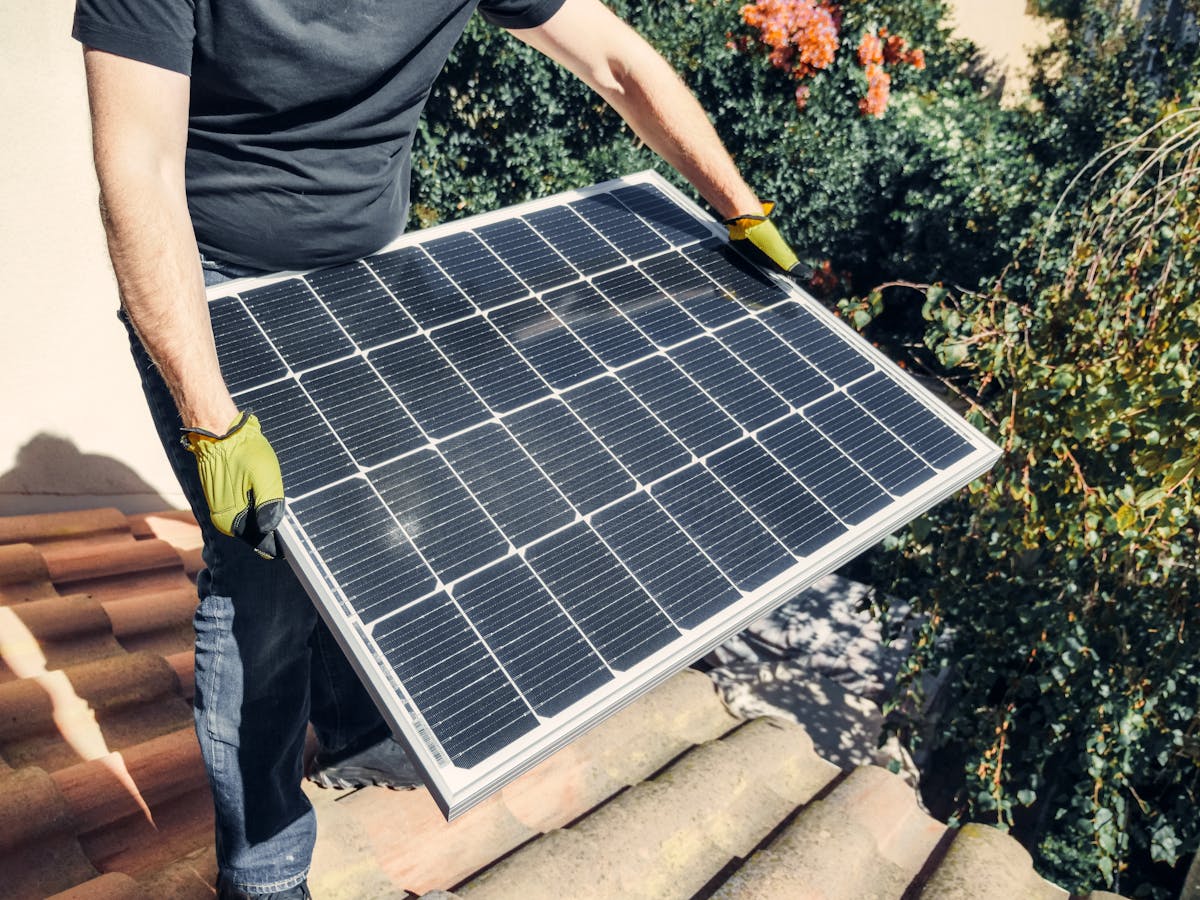
A portable power station without solar panels is just a big battery. For rural homeowners, solar recharging transforms a power station from a short-term fix into a long-term energy solution. Here are our top panel recommendations:
- EcoFlow 400W Portable Solar Panel (~$849) — Foldable, high-efficiency monocrystalline cells. Pair two with the DELTA 2 Max for a 3-4 hour full recharge.
- Jackery SolarSaga 200W (~$579) — Great value, foldable design, compatible with most power stations via Anderson connector.
- Bluetti PV200 200W Panel (~$449) — Durable, high-efficiency, works with any MC4-compatible station.
Pro tip: Store your panels in a barn or garage near a south-facing window or door. When an outage hits, you want to deploy them quickly — not dig them out of a closet.
Portable Power Station vs. Gas Generator: The Rural Comparison
| Feature | Portable Power Station | Gas Generator |
|---|---|---|
| Noise Level | Silent (0 dB) | 65-80 dB |
| Indoor Use | Yes — safe indoors | No — CO poisoning risk |
| Fuel | Solar / wall outlet | Gasoline / propane |
| Maintenance | Nearly zero | Oil changes, spark plugs, carb cleaning |
| Runtime (2,000Wh load) | 1-3 hours (rechargeable) | 8-12 hours per tank |
| Heavy Load Capacity | Good (up to 3,000W) | Excellent (up to 12,000W+) |
| Upfront Cost | $800-2,000 | $500-2,000 |
| Operating Cost | Free (solar) to pennies (wall) | $5-15/day in fuel |
The verdict: Most rural homeowners should have both. A portable power station handles 90% of outage scenarios — keeping essential electronics, internet, and lights running quietly and safely indoors. A gas generator remains essential for sustained heavy loads like well pumps, HVAC systems, or extended multi-day outages where solar recharging can’t keep up.
Setup Tips for Rural Power Station Use
1. Keep It Charged
Don’t let your power station sit at 0% for months. Most manufacturers recommend storing between 60-80% charge and topping off every 3 months. Set a calendar reminder.
2. Prioritize Your Loads
During an outage, resist the urge to plug in everything. Prioritize: refrigerator/freezer first, then internet (Starlink + router), then medical equipment, then lights and charging. Everything else can wait.
3. Pre-Position Solar Panels
Know exactly where you’ll set up panels before an emergency. South-facing, clear of trees, on a stable surface. Practice deploying them once so you’re not fumbling in the dark.
4. Integrate with Your Existing System
If you already have a Home Assistant setup, consider connecting your power station via WiFi for monitoring. Most major brands (EcoFlow, Bluetti, Jackery) have apps that expose API data you can pull into HA dashboards for real-time battery monitoring.
Our Recommendation
For most rural homeowners, we recommend the EcoFlow DELTA 2 Max paired with a 400W solar panel. This combination gives you enough capacity for a full day of essential power, with solar recharging for indefinite runtime during daylight hours. Start with the base unit and add expansion batteries as budget allows.
If budget is tight, the Jackery Explorer 1000 Plus with a 200W panel gets you 80% of the capability at 60% of the price — still a fantastic setup for keeping essentials running during outages.
Living rural means being prepared. A portable power station isn’t just a convenience — it’s a critical piece of your home resilience plan. Have questions about sizing or choosing the right station for your property? Drop a comment below.
???? Free Tool: Solar System Calculator
Planning a solar + battery backup system? Use our free Solar System Calculator to size your panels, batteries, and inverter based on your location and actual appliance usage. It factors in your latitude, array type, and existing equipment to give you a precise recommendation — no guesswork required.