Your smartphone’s weather app tells you what’s happening 20 miles away at the nearest airport. Out here, that’s useless. A ridge, a creek bottom, or even a tree line can mean the difference between frost and no frost, rain and dry. You need hyperlocal weather data — and building your own weather station is easier and more useful than you’d think.
Why Local Weather Matters More in Rural Areas
City folks can trust regional forecasts. They’re surrounded by concrete that moderates temperature swings, and the nearest official weather station is usually within a few miles. Rural properties are a different story. Microclimates are real — your garden might frost while your neighbor’s doesn’t. Wind patterns vary wildly with terrain and tree cover. Rainfall can be incredibly localized; I’ve watched storms drop an inch on my back pasture while the front stayed bone dry. And if you’re irrigating, you need actual conditions, not forecasts from the airport.
A $150 investment in a proper weather station pays for itself the first time it saves your tomatoes from an unexpected frost.
Turnkey vs. DIY
For most people, a quality consumer weather station is the right move. They work out of the box, integrate with popular platforms, and require zero coding.
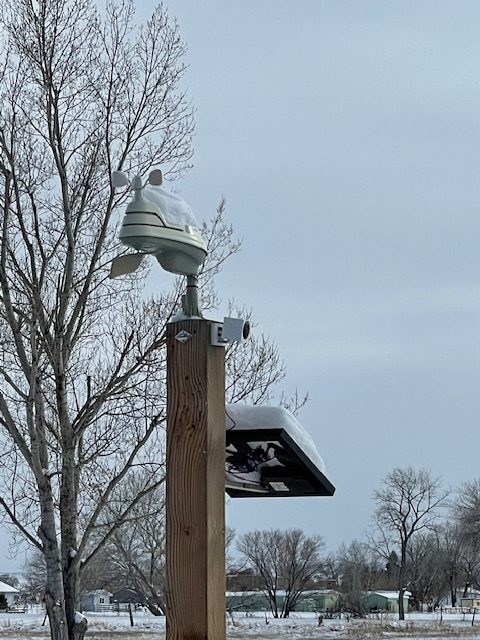
The Ambient Weather WS-2902 (~$180) is my pick for best overall value. It’s solar-powered with WiFi connectivity, a free cloud dashboard, and it works with Weather Underground and Home Assistant right out of the gate.
If you need professional-grade accuracy — especially for agriculture — the Davis Vantage Vue (~$400) has legendary durability and better wind measurement. It’s a real workhorse.
The Ecowitt HP2551 (~$200) is great if you prefer keeping your data local with no cloud dependency, and it’s expandable with additional sensors over time.
If you want complete control and enjoy tinkering, you can build a station with a Raspberry Pi 4 (~$55), a BME280 sensor for temperature, humidity, and pressure (~$10), plus an anemometer, wind vane, and rain gauge for another $65 or so. Add a waterproof enclosure and solar panel for remote deployment, and you’re looking at about $210 total plus your time. You get complete customization, local data ownership, and integration with anything — but it does require some Linux knowledge and sensor calibration.
For most readers, the WS-2902 hits the sweet spot. If you’re already running Home Assistant, it’ll integrate seamlessly.
Setting Up Your Station
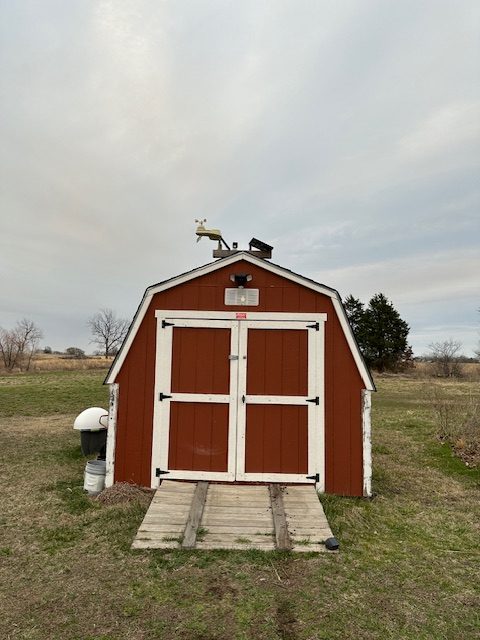
Placement makes or breaks your data quality. Your temperature sensor should be shaded, about 5 feet off the ground, and away from buildings that radiate heat. The rain gauge needs an open area away from trees and structures. And the anemometer should go at the highest practical point, ideally 10 or more feet above any obstructions. Whatever you do, don’t mount everything on your house — radiated heat will skew your temperature readings.
Connecting to Home Assistant
If you’re running Home Assistant, integration is straightforward. Ecowitt and Ambient Weather have native integrations that work great. Davis requires the WeatherLink Live bridge. And for DIY builds, MQTT is your best friend.
Once connected, the real power kicks in. You can automate irrigation based on actual rainfall, get frost warnings specific to your property, track long-term climate trends, and trigger alerts for high winds — time to secure the chicken coop before it becomes a problem.
Making the Data Useful
Raw data is just numbers. The magic is in the automations. Set up a frost alert that notifies you when temperature drops below 36 degrees. Build irrigation logic that skips watering if you’ve had more than a quarter inch of rain. Create wind warnings above 40 mph to protect livestock and secure equipment. These are simple Home Assistant automations that turn your weather station from a curiosity into a genuinely useful tool.
Share Your Data
Consider joining Weather Underground’s Personal Weather Station network. Your hyperlocal data helps improve forecasts for your entire area, and you get a free enhanced forecast in return. Setup takes about 5 minutes and makes you part of the largest community weather network in the world.
Recommended Gear
- Ambient Weather WS-2902 — Best overall value
- Davis Vantage Vue — Professional grade
- Ecowitt HP2551 — Great local-first option
- Raspberry Pi 4 Kit — For DIY builders
- BME280 Sensor — Accurate temp/humidity/pressure
Final Thoughts
A weather station is one of those purchases where you wonder how you lived without it. Knowing exactly what’s happening on your property — not 20 miles away — changes how you garden, how you plan outdoor work, and how you protect your property.
Start with the WS-2902 if you want something that just works. Graduate to DIY if you catch the bug. Either way, you’ll never trust a generic forecast again.
What weather challenges do you face on your property? Drop a comment below — I’d love to hear what you’re monitoring.
This post contains affiliate links. Purchasing through these links supports Rural Upload at no extra cost to you.