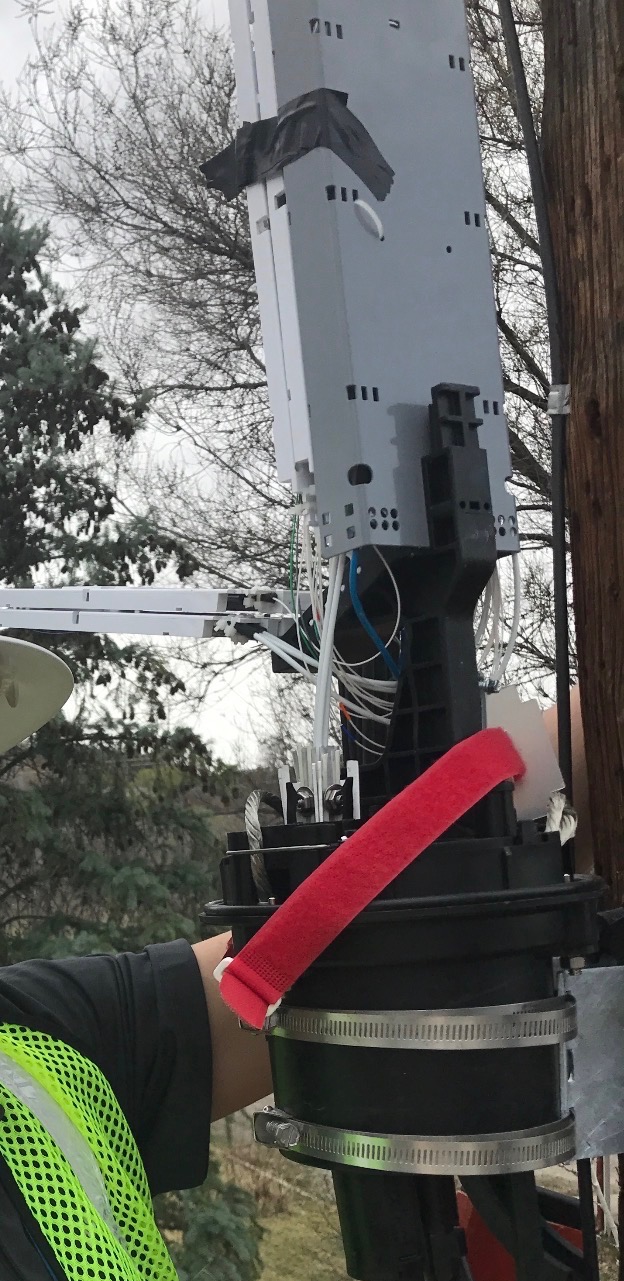
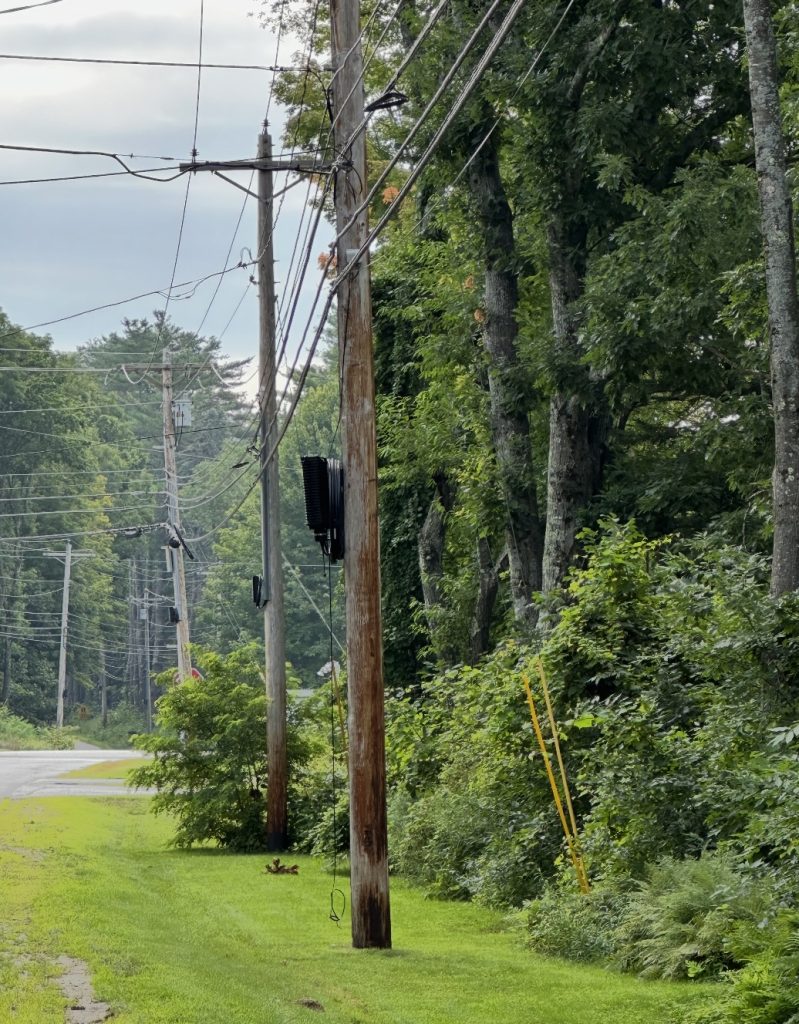
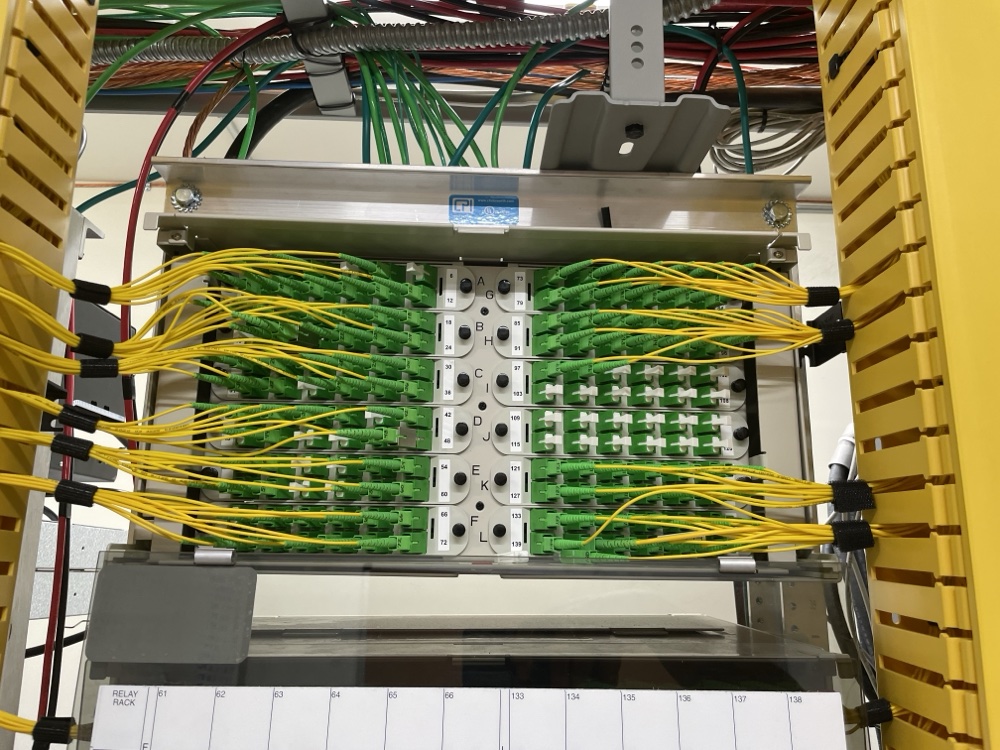
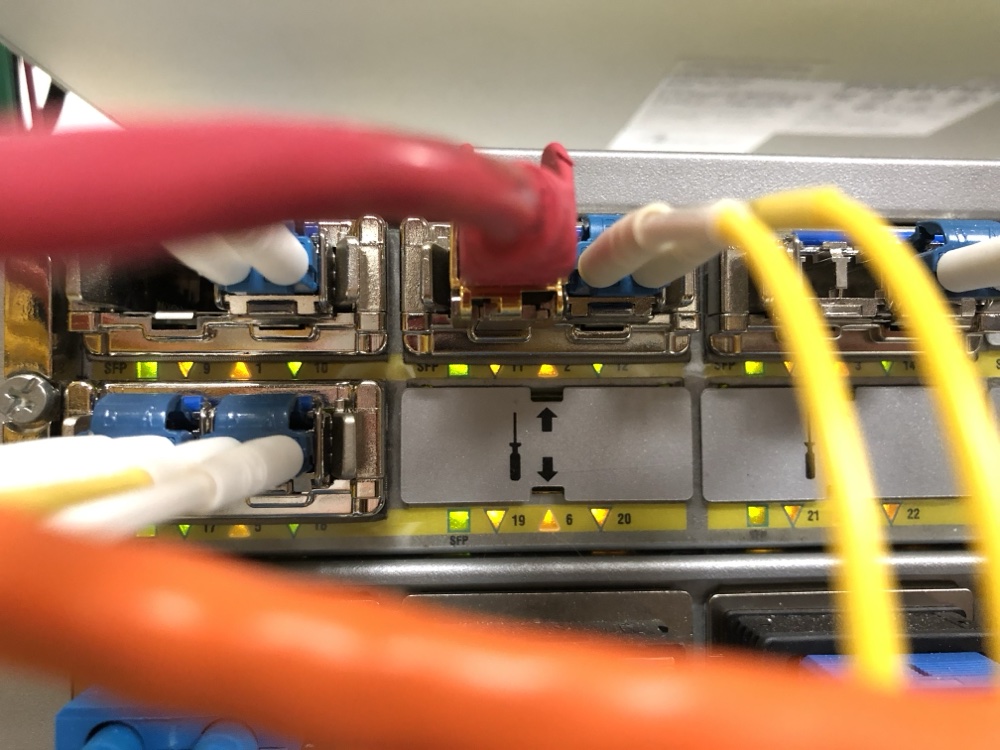
I’ve worked in the field installing fiber optic networks. This isn’t theoretical—these photos are from actual installations, including data center work and pole-mounted fiber. Let me share what you need to know about fiber internet for rural areas.
Fiber Installation Photos
What to Expect During Fiber Installation
When fiber comes to your area, here’s what the process typically looks like:
1. Construction Phase (Months Before You Get Service)
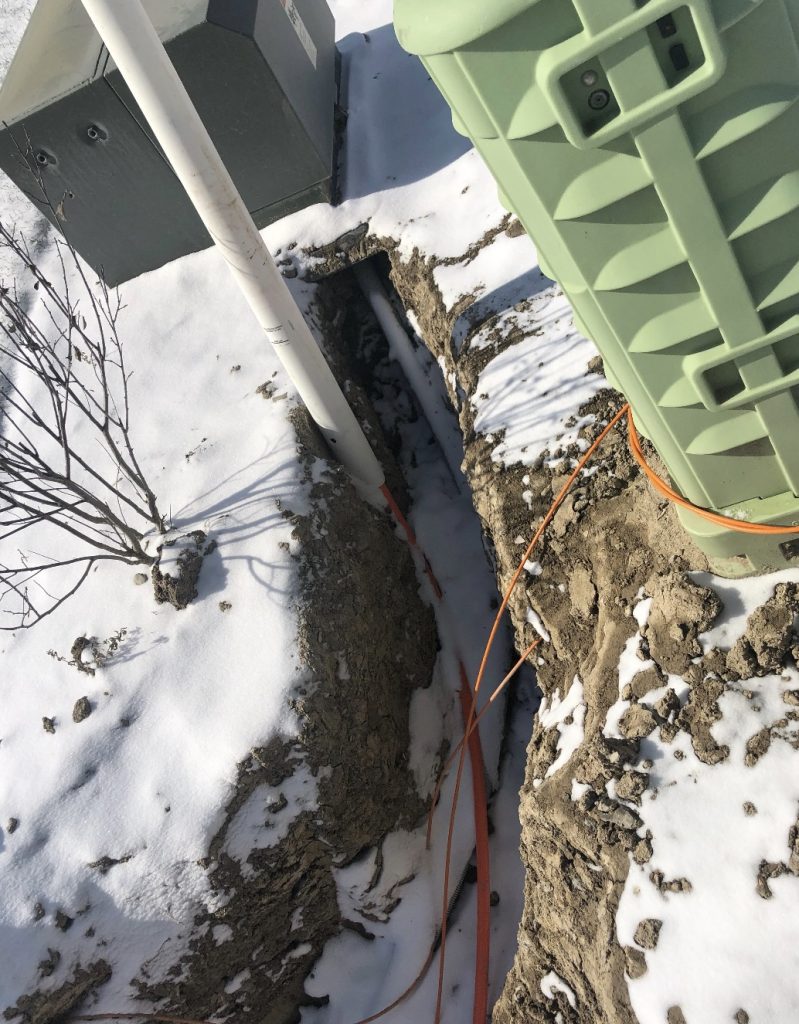
You’ll see crews running fiber along roads and utility poles or burying it underground. This is the expensive part — the labor and materials to get fiber within reach of your property. For rural areas, this can mean trenching or boring along miles of country roads.
2. Drop Installation (Your Property)
Once the main line passes your property, a crew runs a “drop” — a fiber cable from the main line to your house. This is typically buried in a shallow trench or run on your existing utility pole. They’ll install an ONT (Optical Network Terminal) on the outside of your house or in your garage.
3. Inside Wiring
A technician runs a fiber patch cable from the ONT to your router location inside the house. Some providers supply a combined ONT/router unit. The technician will test the connection, verify speeds, and hand off a working internet connection.
What It Costs
Many federally-funded fiber projects cover the construction cost entirely. Your monthly bill will be comparable to what you’d pay in town — typically $50-80/month for gigabit service. Some providers charge a one-time installation fee ($50-100), though many waive it during initial signup periods.
Speed Tiers: What Do You Actually Need?
Fiber providers typically offer multiple speed tiers. Here’s a reality check on what different speeds actually support:
- 100 Mbps — Handles 2-3 concurrent 4K streams, video calls, web browsing, and general use for a small household. If you’re coming from rural DSL, this will feel like magic
- 300 Mbps — Comfortable for a family of 4-5 with multiple devices streaming, gaming, and working from home simultaneously
- 500 Mbps — Plenty of headroom for heavy use. Multiple 4K streams, large file transfers, and home office work without thinking about bandwidth
- 1 Gbps (1000 Mbps) — More than most households need today, but future-proof. Large downloads complete in seconds. Great if you work with large files or have many smart home devices
- 2+ Gbps — Overkill for most residential use, but available and getting cheaper. Content creators, developers, and tech enthusiasts will appreciate it
My recommendation: For most rural homes, the 300-500 Mbps tier is the sweet spot between performance and value. You can always upgrade later — one of the beauties of fiber is that speed upgrades are software-based, not hardware-based.
Fiber vs. the Competition
How does fiber stack up against the other options available in rural areas?
Fiber vs. Starlink
Starlink has been a game-changer for rural connectivity, but fiber is a different league:
- Speed: Fiber delivers consistent speeds (often symmetric). Starlink speeds vary from 25-200 Mbps depending on congestion, weather, and cell capacity
- Latency: Fiber typically delivers 1-5ms latency. Starlink averages 25-60ms — fine for most uses, but noticeable for gaming and video calls
- Reliability: Fiber is unaffected by weather. Starlink can drop during heavy rain or snow
- Price: Fiber is typically $50-80/month. Starlink is $120/month plus the $599 hardware cost
- Verdict: If fiber is available, it’s the better choice in almost every scenario. Keep Starlink as a backup if you’re in a storm-prone area
Fiber vs. Fixed Wireless
Fixed wireless (WISPs) have served rural communities for years, but fiber outperforms it significantly:
- Speed: Fixed wireless typically maxes at 50-100 Mbps. Fiber starts at 100 Mbps and goes to multi-gigabit
- Reliability: Fixed wireless degrades with distance, tree interference, and weather. Fiber doesn’t
- Latency: Fixed wireless: 10-30ms typical. Fiber: 1-5ms
- Verdict: Fiber is superior in every measurable way. Thank your WISP for keeping you connected until fiber arrived
Fiber vs. DSL
This one isn’t even close:
- Speed: Rural DSL often delivers 1-10 Mbps in practice (regardless of advertised speeds). Fiber delivers hundreds or thousands of Mbps
- Technology: DSL runs on copper phone lines — infrastructure that’s decades old and actively deteriorating. Fiber is purpose-built for modern data
- Future: DSL is end-of-life technology. Major carriers are actively decommissioning copper networks
- Verdict: If you’re on DSL and fiber becomes available, sign up immediately. The difference is transformative
Future-Proofing: Why Fiber Is the Long-Term Play
Here’s something remarkable about fiber: the glass strands in the ground today can carry vastly more data than what’s currently being delivered over them. The electronics on each end (the ONT at your house and the OLT at the provider) are the limiting factor, and those are relatively cheap to upgrade.
This means a fiber network built today can deliver 1 Gbps, be upgraded to 10 Gbps with an equipment swap, and eventually support 100 Gbps or more — without digging up a single inch of cable. The infrastructure investment lasts decades.
Compare that to every other technology:
- DSL — Physically limited by copper. Dead end technology
- Cable — DOCSIS 4.0 can deliver multi-gigabit, but coaxial networks have inherent limitations and shared bandwidth
- Fixed wireless — Spectrum is finite and shared. Capacity improvements require new spectrum or denser tower deployments
- Satellite — Capacity is limited by physics (orbital slots, spectrum, and latency). Impressive progress, but fundamentally constrained
- Fiber — Limited only by the electronics, which improve continuously. The glass itself is the transmission medium, and it’s practically unlimited
When someone asks “what internet should I get?”, the answer is always fiber if it’s available. It’s not even a discussion.
How to Find Out If Fiber Is Coming to Your Area
- Check the FCC Broadband Map — broadbandmap.fcc.gov shows available and planned providers at your address
- Contact your electric cooperative — Rural electric co-ops are the biggest fiber builders in rural America right now. Many have broadband subsidiaries
- Visit your state broadband office — Most states publish maps of funded broadband projects
- Ask your county or township — Local government often knows about upcoming broadband projects before they’re publicly announced
- Watch for construction — Fiber construction crews and “coming soon” signs in your area are the most reliable indicator
Final Thoughts
We’re living through the most significant expansion of rural broadband infrastructure in American history. The combination of BEAD funding, USDA programs, and electric cooperative investment means that fiber is reaching communities that were written off as “too rural” and “too expensive to serve” just a few years ago.
If fiber is coming to your area — sign up. If it’s not there yet — advocate for it with your local officials and electric co-op. And if you’re stuck waiting, know that the investment is happening and your turn is likely closer than you think.
Fiber is the endgame for internet connectivity. Everything else is a bridge to get there.
Is fiber coming to your rural community? Already have it? Share your experience in the comments — especially if you switched from DSL or satellite. Those transformation stories are what motivate continued investment in rural broadband.